.svg)
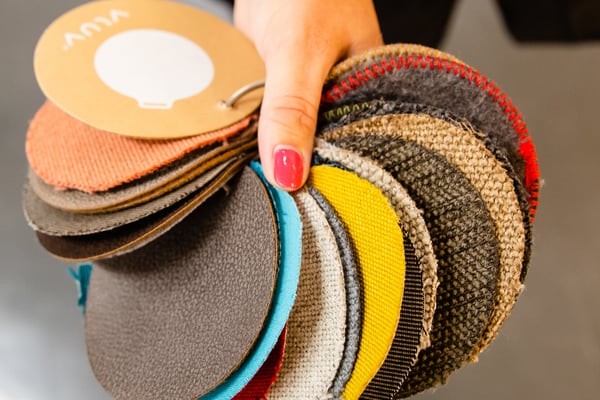
A sofa is not a standard product. One model can carry 50 fabrics, 8 legs, 12 arm variants and 6 seat sizes, which works out at 28,800 possible combinations before you have priced a single made-to-measure blind or planned a two-man delivery. That is exactly where most general-purpose ERP and POS systems start to strain.
Furniture and interior retail has real, documented requirements that generic systems do not cover out of the box: product configurators with tens of thousands of options, per-square-metre quoting, one sale that triggers purchase orders to several suppliers, live supplier catalogues, delivery and installation planning, and long lead times with deposits. Pick the wrong platform and you spend the next five years bolting on the parts it was missing.
This guide ranks the best ERP software for furniture retail against seven criteria that actually matter in this sector. It is deliberately Europe and UK aware rather than US only, and it is honest about where each system is strong and where it is not. Short answer: for independent to midmarket European (and UK-comparable) furniture and interior retailers, our top pick is LogicTrade. STORIS leads in the US. The full ranking, with pricing and limitations, is below.
- Why furniture retail needs specialist ERP
- The 7 criteria we judged against
- Comparison at a glance
- The best furniture retail ERP software, ranked
- Why generic ERPs fall short
- How to choose
- Frequently asked questions
Why furniture retail needs specialist ERP
A furniture retail ERP is the operational backbone of a store: it ties together your point of sale, product data, stock, purchasing, deliveries, service and accounts in one system. A POS only rings up the sale. The difference matters most in big-ticket, made-to-order retail, where the sale is the easy part and everything after it (sourcing, lead times, delivery, installation) is where money is won or lost.
Generic ERPs are built around standard products that you stock, pick and ship. Furniture breaks that model. You sell a configuration that may not exist yet, order it from one of many suppliers, wait weeks or months, take a deposit, then deliver and install it with two people. A platform that does not model this natively pushes the work back onto spreadsheets and staff.
Retail or manufacturing: which do you need?
One quick distinction, because it splits the search results. If you make furniture, you want a manufacturing ERP or MRP (tools such as MRPeasy or Katana, or Cyncly's manufacturing execution systems) focused on bills of materials, production planning and shop-floor control. If you sell and configure furniture sourced from many suppliers, you want a furniture retail ERP. This guide is about the second group.
The 7 criteria we judged against
These are the capabilities that separate a specialist furniture and interior retail platform from a general ERP. We scored every system against all seven.
- Product configurator. Guided, rule-based configuration for sofas, kitchens and cabinets, with dependencies (show option B only if A is chosen), surcharges and volume pricing.
- Made-to-measure quoting. Measurement and per-square-metre pricing for flooring, blinds, curtains and upholstery. In UK terms, blinds and curtains and soft furnishings; in US terms, window treatments and drapery.
- Multi-supplier purchasing. One customer order that generates purchase orders to several suppliers, known as special order, sold order, back-to-back or drop ship, with status tracked per line.
- Live supplier catalogues and EDI. Live prices, descriptions, delivery times and images pulled from supplier catalogues rather than rekeyed by hand.
- Delivery and installation planning. Two-man delivery, fitter and installation teams, route planning and proof of delivery.
- Deposits and long lead times. Deposits, partial payments and orders that stay open for months without losing the thread.
- Omnichannel POS and eCommerce. Browse online, buy in store, deliver home, with one product source feeding webshop, showroom screens and POS (a PIM at the centre).
Comparison at a glance
How the five contenders score on native, out-of-the-box capability for furniture and interior retail. "Yes" means built in and specialist grade, "Partial" means present but limited or narrow, "Limited" means largely absent or dependent on add-ons.
| System | Configurator | Made-to-measure | Multi-supplier POs | Live catalogues / EDI | Delivery & install | Deposits & lead times | Omnichannel |
|---|---|---|---|---|---|---|---|
| 1. LogicTrade | Yes | Yes | Yes | Yes | Yes | Yes | Yes |
| 2. STORIS | Partial | Limited | Yes | Limited | Yes | Yes | Yes |
| 3. Cyncly | Yes | Yes | Partial | Yes | Limited | Partial | Partial |
| 4. Swan Retail / Ordorite | Partial | Partial | Yes | Partial | Yes | Yes | Yes |
| 5. Odoo / Dynamics 365 BC | Limited | Limited | Partial | Limited | Limited | Partial | Yes |
The best furniture retail ERP software, ranked
1. LogicTrade: best for European independent and midmarket furniture and interior retail
LogicTrade is a cloud ERP and PIM built specifically for furniture, bed and interior retailers. Founded in 2008 with more than 15 years in this niche, it is the one system in this list that combines a product configurator, live supplier-catalogue integration, multi-supplier purchasing, omnichannel POS and a full suite of field apps in a single platform aimed at independent to midmarket retailers.
Against the seven criteria it scores across the board. The configurator handles dependencies, surcharges and automatic made-to-measure calculation (LogicTrade's own example is a sofa with 50 fabrics, 8 legs, 12 arm variants and 6 seat sizes, or 28,800 combinations per model). Live Articles pulls live supplier data (prices, descriptions, delivery times and images), and multi-supplier purchase orders track status per line (ordered, confirmed, in transit, received). A set of role-based apps covers the rest: SalesAssist on the shop floor, StoreAssist in the warehouse, FieldAssist for delivery and installation teams, CustomerAssist for order tracking and DealerAssist for B2B ordering.
LogicTrade reports more than 800 retailers and 100+ connected brands, with named integrations including Hunter Douglas, Luxaflex, JAB Anstoetz, Hilding Anders, Forbo, Unilin, XOOON and Henders & Hazel. On its own numbers, quoting goes from 45 minutes to 8 minutes with 60% fewer order errors, and furniture retailer Trendhopper Tilburg reports saving at least two hours a day on quotes and orders (store manager Marco de Rooij).
Pricing: transparent and public, which is rare here. Plans run from €239/month (Basic) through €359 (Pro) to €479 (Premium), plus €13 per extra user. See the pricing page for the current breakdown.
Ideal customer: independent interior, furniture and bed retailers and small chains (two to ten-plus locations) that want a specialist all-in-one without enterprise cost.
Honest limitations: it is a smaller vendor with a European footprint (strongest in the Benelux, expanding into Germany) rather than a global one, and its live supplier-catalogue depth is deepest in the Benelux. It is not an enterprise system for national US chains in the way STORIS is.
2. STORIS: best for US mid-to-large home furnishings chains
STORIS is the established US ERP for home furnishings, bedding and appliance retailers of big-ticket products, with 35+ years in the industry. The vendor states that more than 450 retailers rely on it, including many of the industry's Top 100, and that 60% of its clients are independent businesses.
It is strong on special-order management (special-order sales automatically generate the related purchase orders, with a pricing scratchpad for customised products), delivery routing, integrated eCommerce via eSTORIS with available-to-promise, consumer financing, demand forecasting and a mobile-first NextGen platform. STORIS says mobile POS can cut checkout times by up to 70%.
Pricing: quote only, with multi-year contracts. User reports put starting prices above $500/month, which should be treated as an estimate rather than an official figure.
Ideal customer: US mid-to-large furniture, bedding and appliance retailers and multi-store chains.
Honest limitations: US-centric, with an interface users often describe as dated, a steep learning curve and a high price. It has no native support for European supplier-catalogue standards, and it is stronger on sofa and mattress special orders than on made-to-measure interior categories such as blinds and flooring priced per square metre.
3. Cyncly: best for visual design and configuration at scale
Cyncly was formed by the 2021 merger of Compusoft and 2020, and rebranded in 2022. Per its April 2025 press release, it serves more than 70,000 customers across 100 countries with more than 2,500 employees, under brands including 2020, 3CAD, Compusoft, RFMS and Virtual Worlds.
Its strengths are the world's largest catalogue-content library and best-in-class visual CPQ, 3D room design and space planning, spanning kitchen, bath, furniture, flooring and windows. If design-led visualisation is your priority, few can match it.
Pricing: opaque, quote only.
Ideal customer: manufacturers and design-led kitchen, bath and furniture retailers that want top-tier visualisation and configuration.
Honest limitations: the portfolio is fragmented across many brands rather than one unified furniture-retail ERP, and the strength skews to design, visualisation and manufacturing. The retail back-office ERP is not a single cohesive product.
4. Swan Retail (FRS) and Ordorite: best for the UK and Ireland
For UK and Ireland credibility, two regional specialists stand out. Swan Retail's FRS (part of ClearCourse) is a UK furniture, bed and flooring retail platform positioned as a true ERP, covering point of purchase through to financial accounts, with supplier-catalogue import, delivery-run planning with capacity indicators, warehouse management and integrated eCommerce (WooCommerce, Shopify). Named UK customers include Furniture Village, Fenwicks, Sterling Furniture Group and Lenleys.
Ordorite (Ireland and UK) is a cloud-based, end-to-end furniture and bedding retail management system with a five-step POS, a made-to-order "tile builder" for customisable products, container ordering, delivery and route planning, a proof-of-delivery app and RFM marketing tools. It suits multi-store furniture and bedding chains.
Pricing: quote only for both.
Ideal customer: UK and Ireland furniture, bed and flooring retailers, from single stores to chains.
Honest limitations: both are regionally focused, some interfaces are reported as dated (notably in Ordorite reviews), and they carry fewer live European supplier-catalogue integrations than LogicTrade's Benelux depth.
5. Odoo and Microsoft Dynamics 365 Business Central: the generic contenders
These are the general-purpose ERPs furniture retailers most often shortlist, included here to show the specialist gap honestly. Odoo is an open-source modular ERP that genuinely handles product variants, make-to-order, POS and eCommerce. Microsoft Dynamics 365 Business Central brings strong finance and inventory, and it does have a native Special Order purchasing code that links a sales line to a supplier PO.
Both can run a furniture business, but only after work. Neither ships with a guided furniture configurator, made-to-measure quoting, live furniture supplier catalogues, or delivery and installation planning as standard. That is why an ecosystem of furniture "accelerators" and paid add-ons exists to fill the gaps.
Pricing: Odoo is low entry cost per app; Business Central is per user. The real cost is the customisation and partner work to make either furniture-ready.
Ideal customer: retailers who also manufacture, or who need deep finance and will pay a partner to build the furniture-specific layer.
Honest limitations: the furniture-specific capabilities are add-ons, not standard functionality, so total cost and time of ownership climb quickly.
Why generic ERPs fall short
It is worth being specific, because "generic ERP will do" is the most expensive assumption in this sector.
Variant explosion. Generic variant engines treat options as a Cartesian product of attributes. A configurable sofa quickly generates thousands of variants per template, and performance degrades as the count climbs (Odoo users report slowdowns beyond roughly 1,000 variants per template, and very large variant imports taking hours). There is usually no native step-by-step configurator with conditional "show B only if A" logic, and the configurator is not native on purchase orders.
No native made-to-measure. Per-square-metre and measurement-based pricing for flooring, blinds and curtains is simply absent. The fact that a whole micro-industry of window-covering quoting tools exists is proof that generic ERPs do not cover this natively.
No live furniture catalogues. Generic systems have no native connection to furniture supplier-catalogue standards, so prices and availability are rekeyed by hand or imported from stale files.
Business Central's Special Order code is a genuine head start, but it still needs furniture accelerators (UK partners build exactly these for big-ticket furniture and flooring, citing quotes, deposits, long lead times and supplier-led fulfilment). The pattern is consistent: the generic platform gets you a ledger and stock, and you pay again for the furniture.
How to choose
Match the system to your reality, not to a feature list.
- By geography. US enterprise chain, start with STORIS. UK or Ireland specialist, look at Swan Retail or Ordorite. Independent to midmarket in Europe, or a UK-comparable retailer that buys from many suppliers, LogicTrade fits best.
- By size. National chains need enterprise depth and can absorb enterprise cost. Independents and small chains are better served by a specialist all-in-one with predictable pricing.
- By product mix. Heavy on made-to-measure interior (flooring, blinds, curtains) points to specialists with per-square-metre quoting and live catalogues. Sofas and mattresses only is more forgiving.
- By budget and transparency. If you want to know the price before a sales call, note that LogicTrade publishes its pricing from €239/month, while STORIS, Cyncly and Ordorite are quote only.
Whatever you shortlist, test it against the seven criteria with your own worst-case order: a configured, made-to-measure item, sourced from two suppliers, with a deposit and a two-man delivery. That single scenario tells you more than any demo script.
Frequently asked questions
What is a furniture retail ERP, and how is it different from a POS?
A furniture retail ERP runs the whole operation: POS, product data, stock, multi-supplier purchasing, deliveries, service and accounts in one system. A POS only handles the sale at the counter. In big-ticket, made-to-order retail the sale is the easy part, so the ERP is where most of the value sits.
What is the best ERP software for a furniture store?
There is no single best for everyone. For independent to midmarket European and UK-comparable furniture and interior retailers that buy from many suppliers and sell configurable, made-to-measure goods, we rank LogicTrade first. STORIS leads for US mid-to-large chains, and Cyncly leads if design and visualisation are the priority.
Which is the best ERP software in the world?
For general enterprise ERP, SAP, Oracle and Microsoft dominate. But "best in the world" is the wrong question for a furniture retailer, because a specialist system that models configurators, made-to-measure quoting and multi-supplier purchasing will out-perform a bigger generic platform in this niche.
Can generic ERPs like Odoo or Dynamics 365 handle furniture retail?
Partly, and only with extra work. They handle finance, stock and standard variants, but they lack a native guided configurator, made-to-measure quoting, live furniture catalogues and delivery planning. Making them furniture-ready means paid add-ons or a partner build, which raises the total cost and time of ownership.
What ERP system does IKEA use?
IKEA has historically relied on heavily customised, in-house and enterprise systems rather than an off-the-shelf furniture-retail ERP. That is not a useful template for most stores: a global, vertically integrated manufacturer-retailer has very different needs from an independent furniture or interior retailer.
Is ERP outdated?
No. Cloud delivery, mobile apps and, more recently, AI have modernised ERP considerably. A modern cloud ERP for furniture retail looks nothing like the on-premise systems that gave ERP its dated reputation.
How much does furniture store software cost?
It varies widely and most vendors quote only. LogicTrade is a transparent exception, publishing plans from €239/month plus €13 per extra user. STORIS is quote only, with user reports of starting prices above $500/month (an estimate, not an official figure). Cyncly and Ordorite are also quote only.
What is special order (sold order or back-to-back) purchasing?
It is the case where one customer sale generates purchase orders to one or more suppliers, rather than being fulfilled from stock. Also called sold order, back-to-back or drop ship, it is a defining requirement in furniture retail. Specialist systems track the status of each supplier line against the original sale.
What is a product configurator, and why do furniture retailers need one?
A configurator lets staff and customers build a product from options (fabric, size, legs, arms) with rules, dependencies and pricing applied automatically. Furniture needs one because a single model can carry tens of thousands of valid combinations, which is impossible to quote accurately by hand.
How do you quote made-to-measure products such as blinds, curtains and flooring?
You need measurement-based, per-square-metre pricing that also handles surcharges for special sizes. Specialist furniture and interior systems calculate this automatically from the dimensions entered, so a made-to-measure quote is as fast and reliable as a standard one.
What are IWOfurn and IDM, and why do they matter?
IWOfurn is the leading furniture supplier-catalogue and EDI platform in the German-speaking market, and IDM (with IDM Polster for upholstery and IDM Wohnen for living-room furniture) is the underlying data format. They matter because they let retailers pull live, accurate supplier data instead of rekeying it. LogicTrade's Live Articles is the functional Benelux equivalent. You can read more about the standard at IWOfurn.
What software is best for furniture design?
For visual design and 3D room planning, look at design and visualisation tools such as Cyncly's 2020 or general CAD packages. That is a different job from a retail ERP, which runs quoting, purchasing, delivery and accounts. Many retailers pair a design tool with a furniture retail ERP.
If your shortlist keeps running into the same seven requirements, that is the signal to choose a specialist rather than adapt a generic platform. LogicTrade was built for furniture and interior retail from the start, with the configurator, live supplier catalogues, multi-supplier purchasing and delivery planning already in the box. If you want to see it against your own worst-case order, book a free demo or browse real customer references first.