.svg)
As an interior designer, you work with dozens of suppliers, hundreds of products, and projects that run for months. You create quotes by hand, wrestle with delivery times, and answer clients calling for status updates. Meanwhile, your administration falls behind. Interior designer software built specifically for your profession takes this work off your hands so you can focus on projects and clients.
In this article, you will learn what an integrated ERP and PIM system for interior designers means in practice, which processes it solves, and what it concretely delivers for you.
What goes wrong without specialized interior designer software
Most interior designers work with a mix of tools: spreadsheets for quotes, email for supplier communication, and a standalone invoicing program for bookkeeping. That works — until a project grows or you have multiple projects running at the same time.
No visibility on orders: You don't know in real time what has been ordered and when it will be delivered.
Manual status updates: You send clients updates about their project progress by hand.
Fragmented supplier data: Quotes take hours because information is scattered across PDF catalogues, Excel sheets, and email attachments.
Margin loss: A mistake in a quote directly costs you part of your margin.
What project management with interior designer software delivers
An ERP system for interior designers brings all processes together in one platform. These are the benefits you will notice immediately:
Live supplier data: Up-to-date prices, availability, and delivery times from dozens of suppliers are in your system — no phone calls or emails needed.
Faster quotes: You go from manual calculation to a configurable quote you put together in 8 minutes instead of 2 hours.
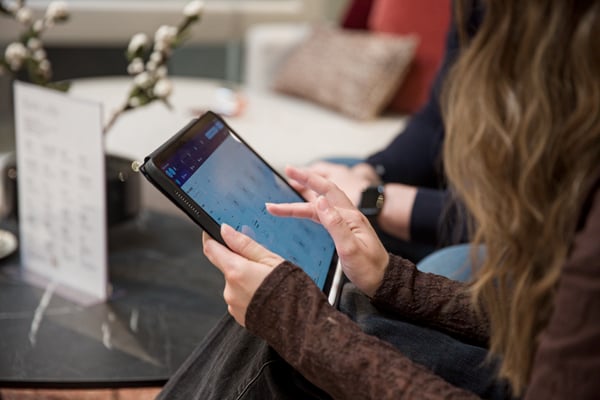
Project overview on one screen: Per project you see what has been ordered, what has been delivered, and what is still open. From quote to order to invoice without transcription errors or duplicate entry.
Automatic client communication: Clients receive automatic status updates so they no longer need to call.
Why interior designer software needs to be industry-specific
Generic accounting or ERP software doesn't understand the complexity of interior projects. A sofa with 100 fabrics, 10 leg options, and 8 configurations is, to generic software, just an item with a product number. A system built specifically for interior designers understands custom products, supplier integrations, and the longer sales cycle that comes with project work.
LogicTrade developed its platform specifically for the home furnishing industry. More than 800 furniture stores and interior designers use it every day. All features are built on feedback from interior professionals in the field.
What automation delivers for small interior designers
You don't need to be a large company to benefit from automation. Especially for a small team or a self-employed interior designer, it makes the biggest difference: less administration, more time for clients and projects, and a professional image toward suppliers and clients.
An interior designer who switches to LogicTrade saves an average of 5 hours per week on quote and order processing. For a freelancer or small studio, that is the difference between taking on an extra project or not.
How your client benefits too
Faster quotes, more accurate orders, and proactive status updates: your client notices it immediately. Fewer misunderstandings, fewer phone calls asking "when is my sofa arriving?", and a project that runs as promised. That builds trust and increases the chance of repeat business.